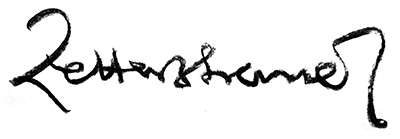
Between Image Systems – Kristoffer Zetterstrand’s Artistic Position
Kristoffer Zetterstrand’s artistic practice is rooted in a sustained investigation of what an image is and how it operates in a time when digital and material worlds overlap. By combining 3D modelling with traditional oil painting, he positions himself in a liminal zone: between simulation and presence, between rendering and brushstroke, between virtual pictorial spaces and the tangible weight of painting.
In his interview The Digital Canvas (2019), Zetterstrand describes how he uses 3D software to construct elaborate scenes — a kind of scenographic laboratory where light, perspective, and spatial relationships can be tested with ease. These digital spaces, however, are not ends in themselves. Instead, he translates them into oil paintings. In this translation, the immaterial image gains body, texture, and luminosity. The act recalls Plato’s allegory of the cave, but with an inversion: instead of the painted image being a shadow of the real, here the digital simulation becomes the shadow that painting materializes, granting it presence in the world.
A defining aspect of Zetterstrand’s method is his deliberate retention of cracks in the illusion — perspective inconsistencies, edge lines, and sudden material breaks that expose the artificial structure beneath. This gesture resonates with Brecht’s Verfremdungseffekt, which disrupts immersion to make the spectator aware of the construction of what they behold. In works like Uncanny Valley, this strategy is particularly potent. The viewer occupies a double position: drawn into the scene while simultaneously made aware of its artifice. The uncanny arises not from the image failing, but from it succeeding almost too well — echoing philosophical debates about representation and mimesis that stretch from Aristotle to contemporary media theory.

Zetterstrand also reflects on how his paintings move through contexts. When his works entered the world of Minecraft, they began to circulate independently — embedded in players’ virtual spaces, shared online, endlessly recontextualized. Rather than resisting this, he embraces it as part of the paintings’ ontology: the image exists not as a static object but as a node in a network of translations, moving between 3D model, physical painting, digital reproduction, game world, and social media. This fluidity recalls Walter Benjamin’s insights into the changing “aura” of artworks in the age of mechanical reproduction — except here, painting and digital reproduction are not in opposition but in continuous dialogue.
Philosophically, Zetterstrand’s work probes the boundary between appearance and reality, not to collapse it, but to let both states remain legible at once. His practice can be seen as a kind of visual phenomenology: an exploration of how images are constructed, perceived, and situated in overlapping ontologies — the virtual and the material, the rendered and the painted, the networked and the singular.
Art history is ever-present in his practice, not as nostalgic quotation but as a living language. Drawing on Renaissance spatial construction, classical landscape painting, and scenographic strategies, Zetterstrand uses historical pictorial systems to articulate contemporary visual experience. He neither romanticizes painting nor fetishizes the digital; instead, he sets the two in productive philosophical friction, revealing each through the other.
His artistic stance is neither technological euphoria nor traditional purism. It is analytical and practical: digital tools are used to understand and build pictorial space; painting gives these spaces body and light; fissures in the illusion create moments of reflection; circulation allows the works to live new lives.
In this balance, Zetterstrand formulates a distinctive voice in contemporary painting. His works suggest that painting remains a powerful site for interrogating how we see and understand images today — not by competing with the digital, but by giving its shadows form, history, and a place in shared consciousness.